Pages

Showing posts with label wildlife. Show all posts

Evolutionary breeding, just like weeds

September 2022

Despite all the toxins, genetic devices, and shear physical destruction we throw at them, pests of all kinds continue to thrive in our fields. As climate change imposes all manner of unusual stresses on the environment, farmers and their crops struggle, while pests go from strength to strength.

It's not too difficult to see why. 

Herbicide tolerant GM soya is insecticidal too

June 2022

Glyphosate-tolerant GM crops aren't something that usually bring insecticides to mind.  Indeed, historically, US soyabeans were only sporadically challenged by insect pests.  Things changed around 2000 with the arrival of the soybean aphid which can only be controlled by foliar spraying.  Hot on the heels of this pest invasion came dramatic increases in bean leaf beetle which prompted the US Environmental Protection Agency (EPA) to issue an emergency exemption for neonicotinoid insecticidal seed treatments. 

Self spreading viruses

April 2022

Is there any such thing as a non-self-spreading virus? Or, to re-phrase the question using some of the alternative, interchangeable, technical terms which pop up: is there any such thing as a non-transmissible, non-self-disseminating, non-contagious, non-horizontally-transferable virus?

The answer is no. Viruses only exist by hijacking living cells and forcing them to churn out viral particles. Viruses wouldn't exist if they weren't self-spreading, transmissible, self-disseminating, contagious, horizontally transferable (and uncontrollable).

So, what are we talking about?

The plight of the honeybee

January 2020


"New evidence is revealing we are teetering on the edge of an era of massive extinction, propelled in large part by the very pesticides and practices used with genetically engineered crops ... In a groundbreaking new study, researchers estimate that 40 percent of insect species face extinction - and we could be looking down the barrel of total insect population collapse by century's end, primarily as the result of the agricultural pesticides and mega-monocultures of industrial agriculture. Designed specifically for intensive chemical use, genetically engineered crops are key drivers of this impact" (Lappé) .

A huge proportion of our food supply is dependent on insects for pollination. In agricultural settings, one of the most abundant pollinators is the honey bee: in fact, one estimate reckons that one in every three bites of food we eat is from a crop pollinated by honeybees; and according to the United Nations Environment Programme, of the 100 crops that provide 90% of the world's food supply, 71 are pollinated by bees. Across America, commercial beekeepers are suffering astronomical hive losses averaging 40-50% annually, with some as high as 100%. This severely cripples their ability to meet pollination needs. At least one source of the disaster isn't difficult to find: honeybees are one of the non-target organisms impacted by the use of agrichemicals, and the impact is growing.

Super-simplified agri-systems support disease

August 2019

E.coli 0157 -


In 1996, an outbreak of E.coli 0157 bacterial disease in Scotland involved the largest recorded number of infected adults in whom the early digestive-tract symptoms progressed to life-threatening kidney disease. Twenty-eight of them died.

That same year, 7,966 individuals were diagnosed with E.coli 0157 infection in a single outbreak in Japan.

Because the guts of healthy cattle are a reservoir for E.coli 0157, the animals, their manure, and the land they've grazed, are potential sources of the infection. The bacteria can also make their way from fields into the water supply.

The Scottish E.coli 0157 outbreak was caused by contaminated raw meat stored next to cooked meat. The Japanese outbreak was caused by radish sprouts contaminated by infected water.


Organic foods have always been seen as an arch-enemy by biotech proponents. In a desperate attempt to trash organics, they've even been blamed for deadly infections of E.coli 0157 bacteria.

Old Dicamba, same old problems

July 2019


As Roundup herbicide and Roundup-tolerant GM crops become increasingly obsolete, the biotech industry has been trying to move 'forward' with a 'new' package: the antiquated broadleaf herbicide dicamba and dicamba-tolerant GM crops. 


Back in 1994, some 5.7 million pounds of dicamba were used annually in US agriculture, almost all of it on corn.  It was already well-established that dicamba is prone to drift during spraying, especially in hot weather, and that it's a persistent environmental contaminant.  "Since dicamba can damage or kill most broad leaved plants, any unintended exposure can have important consequences.  These effects have been studied mostly in agriculture and little is known about impacts on native plants" (Cox).  A quarter of a century on, the situation isn't much different.

Live life on the veg

July 2019

The kiss of the sun for pardon
The song of the birds for mirth
One is nearer God's heart in a garden
Than anywhere else on earth.
(Dorothy Gurney 1858-1932) 


Professor of Biological Sciences (and avid gardener) Dave Goulson of the University of Sussex advocates growing your own fruit and vegetables because it's good for the environment, saves money, and "is also extremely good for the soul, giving people a real sense of satisfaction and getting them out into nature". 


TV chef, Hugh Fearnley-Whittingstall, chipped in "Anything that takes you away from anonymous, industrialised food is good for your spirit and your health.  It's in season, it hasn't travelled far and it hasn't been packed in inert gases to give it a long shelf life". 


A study in America where, despite its wealth, more than 10% of households experience food insecurity in any given year looked into the benefits of growing your own vegetables. 

Could GM fish oil wreck the environment?

November 2018


Concerns about eating salmon stuffed with GM omega-3 oils may be over-blown [1], but the risks to the environment are very real.

GM maize data mountain

June 2018

A recent article in Forbes Magazine suggested that the "mountains of scientific proof" of "how big the benefit and small the risk is from GMO crops" should "put a categorical end to (the) worries" of the apparently uninformed public in whom "GMO paranoia continues to rage".

RNAi fantasy

February 2018

Some 40% of pollinator species, including butterflies and bees, are facing extinction.

Climate change is, of course, taking its toll as wild animals find their life-cycles out of step with the plants they depend on. More has been made, however, of the toll exacted by neonicotinoid insecticides ('neonics').

Now, the largest ever field study of the effects of neonics on bees has, indeed, confirmed the negative impact. It also revealed the extent of contamination of wild plants. This was backed up by second study published the same day which reported that wildflowers are the bees' main source of exposure to the insecticides.

Science-free wildlife death traps

May 2017

Documents from the US Environmental Protection Agency (EPA) in early 2017 show that almost 100% of GM corn is pre-treated with neonicotinoid insecticides. In addition, although the EPA has concluded that neonicotinoid seed treatments have no economic benefit to soya growers, incomplete data indicate that over 50% of soya beans are also coated with the insecticide.

Neonicotinoids, of which there are several brands and classes on the market, are used as seed coatings. They end up throughout the mature plant, its flowers, pollen and nectar, and 95% of the coatings spread through the wider environment including soil water and dust in the air. UK trials have found that at least one neonictinoid accumulates in the soil with increasing toxicity over several years.

Across America, tens of millions of acres of land are planted with corn or soya (often year about), each producing its own fresh wave of neonicotinoids.

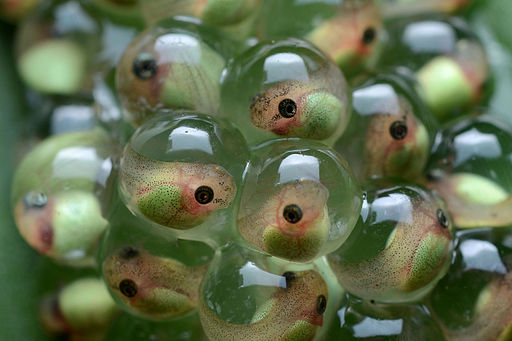
GM and tadpoles don't mix

May 2016

'Bt' toxins are a favourite tool of genetic engineers for creating crops which generate their own pesticide to kill whatever is their most troublesome insect pest.

In Nature, such toxins are formed by a variety of strains of Bacillus thuringienses bacteria (hence 'Bt') found in soil and on plants. Organic farmers may use Bacillus thrunigienses fermentations as natural, short-lived insecticide sprays on their crops. Outside of organic agriculture however, Bt-toxin containing formula are used to control specific problematic insects, such as disease-carrying mosquitoes.

Gene driven insects

April 2016

Not content with Nature's measured pace for adjusting the genome to suit the ecosystem, the environment and the future, genetic engineers have devised a way to force GMOs to add an extra copy of artificial DNA into their offspring.  This creates a mutagenic chain reaction which drives the artificial DNA progressively into subsequent generations.

The 'gene-drive' is based on a bacterial genome-editing technique described by GM-free Scotland before - CRISPR-Cas9 [1].  'Cas9' is an enzyme which cuts DNA, while the 'CRISPR' part is a homing device to anchor the Cas9 to the desired bit of the genome.  In a gene-drive, the CRISPR-Cas9 stays where it is in the genome and carries on mutating the genome of the wild-type mate during reproduction to produce nothing but mutated offspring.

This means that what genetic engineers can do now is population engineering, and if applied to wild populations this is ecological engineering.

Could Bt crops wipe out biodiversity?

February 2016

The major target of "Bt" insecticidal proteins in GM crops is moth caterpillars, different species of which feed voraciously on the stems, leaves, roots, or developing seed parts, of important commodity crops.

Although most insect pest attacks are localised to specific parts of the plant, Bt plants are genetically transformed to produce the insecticidal protein throughout their tissues including the seeds and pollen.

Edinburgh ditches Glyphosate

February 2016
 
What do Barcelona and Edinburgh have in common?
 
They are two of the most picturesque cities, they both have stunning architecture and an awful lot of tourists, and both can boast lots of green spaces. Also, they each have City Councillors on the ball enough to notice that they are treating their green spaces with a probable carcinogen, to which their citizens and tourists will probably be exposed. Therefore, they've both come to conclusion that it's probably a good idea to ban the offending substance.

The US corn addiction

November 2015

Corn growing in Illinois, USA. Photo Creative Commons
According to the US Center for Biological Diversity, world usage of the herbicide, glyphosate, is at an all-time high tied to the proliferation of GM crops. Glyphosate-tolerant GM plants (that is 94% of all soyabean monocultures and 89% of maize) can accumulate the herbicide and be planted in glyphosate-treated soil without harm while the weeds around them perish.

One of the weeds which is perishing on a grand scale in and near GM fields is milkweed.

Milkweed is the sole food for the iconic 'Monarch' butterfly caterpillars. Monarchs are famous for their long-distance multi-generation migrations across the US, but to do this there needs to be a patch of milkweed at regular intervals on the flightpath to feed the caterpillars in preparation for the next leg of the journey.

With all that glyphosate around in the environment, there's just not enough milkweed, few caterpillars, and very few Monarch butterflies left: their numbers are reckoned to have declined 80% in the last 20 years.

But, while we're all fretting over a very beautiful and unique insect, one US farmer is telling us:
"we've missed the entire point about GMO food".

Americans are just about as dependent on corn and soya, now largely laced with glyphosate, as the Monarch's are on milkweed. Consider that nine out of every ten bites of US food are created courtesy of GM ingredients: from all manner of livestock reared on GM feed, to tortilla chips, to the corn syrup in every kind of processed snack, drinks and 'healthy choices'. One inquisitive scientist determined that 69% of the average American's body carbon is derived solely from corn, 89% of which is GM. And that's not counting in the carbon from GM soya.

This is indeed a serious dependency problem, but it too is missing the point about GMO food.

Google Map photos of the State of Illinois, a major grain-growing State, just before the planting season, tell all. What you see is brown. Brown is bare earth, sprayed with glyphosate ready for the spring planting.

In order for maize and soya to grow, requires death on a massive scale. Death on a scale so massive you can see it from outer space.

According to the US Department of Agriculture, more than 170 million acres of corn and soya are in production in the US. At a conservative estimate of 10 gallons of glyphosate per acre, this translates into 2 billion gallons of the herbicide poured onto American soil this year alone. We're talking about an area the size of California and Montana combined, which we're killing dead each year to grow mainly GM crops, mainly contaminated with glyphosate.


OUR COMMENT


The next phase of the Google Map photo is, of course, an ocean of GM corn and GM soya, waiting to slake the American addiction.

Nothing much can swim in that ocean, and Americans are drowning themselves in it.

Let's not go there.


SOURCES

  • Sam Levin, California EPA moves to label Monsanto's Roundup "carcinogenic", East Bay Express, 5.09.15
  • We've Missed the Entire Point About GM food - A Farmer Explains Why, www.huffingtonpost.com, 22.09.15
  • Adoption of Genetically Engineered Crops in the U. S.: Recent Trends in GE Adoption, www.ers.usda.gov, data 2000-2015

Maize - MON 810 harmful to aquatic life

November 2015


GM maize, 'MON 810', has the third highest number of regulatory approvals globally.  The transgenic plants generate a look-alike bacterial protein, 'Cry1Ab', one of the 'Bt' insecticides, which targets specific pests.  Cry1Ab was the first GM insecticide to be commercialised and is approved for cultivation in the EU, although it has been prohibited in several Member States due to concerns of a risk to biodiversity.

Glyphosate plus a wealth of contaminants

October 2015

Photo Creative Commons
Glyphosate herbicide is sprayed on, and accumulated by, most GM crops.  Despite the fact that it's always used in formulations such as 'Roundup', "There is an unexpressed, widely believed assumption that the active principle against plant metabolism (glyphosate) is the most toxic compound of glyphosate-based herbicide formulations on non-target species." (Mesnage et al.)

These 'non-target species' include wildlife, livestock, pets and humans.

How valid is this 'widely believed' assumption?

Bees with dementia

September 2015

Photo Creative Commons
The possibility that neurotoxic effects of glyphosate herbicide (used on most GM crops) could be one of many contributing factors to bee die-off was suggested earlier this year [1].

The following month, a paper was published describing effects of glyphosate on honeybees' ability to navigate back to their hive.

Bt cotton is driving farmer suicides

August 2015
Photo Creative Commons
Indian farmers have been growing cotton for some 5,000 years. They made India the centre of world cotton innovation, and, during the industrial revolution, a major player in the textile industry. Pink bollworm was their key pest, but it clearly didn't hold them back.

The green revolution in the 1970s brought hybrid cottons and insecticides to control pink bollworm. Unfortunately, the insecticides also eliminated natural predators resulting in a surge of previously minor pests which proved more difficult to control than the bollworm.

Inevitable evolution of pests (including pink bollworm) to resist chemical pesticides made a bad situation worse. By 2002, 75% of insecticide used on cotton was for bollworm. That same year, GM 'Bt' cotton which generates its own insecticide was introduced to India to 'solve' the problem.