Pages

Showing posts with label cloning. Show all posts

Cleaning-up the genome? Never!

January 2019


Dr. Gurian-Sherman* has made it clear that GM side-effects can never be eliminated.

Unintended effects of artificial DNA modification can arise in many way, for example:
  • The position of the forced change in the genome can disrupt the function of neighbouring DNA, and this in turn can disrupt multiple, interacting biochemical pathways. 
  • Gaps or DNA scrambling may arise in the plant's genome 
  • Extra DNA fragments can be scattered around in the genome 
  • During the transformation procedure, cells are grown in a culture flask outside the stabilising influence of the living whole-plant: they emerge full of genetic errors. 

The future of potatoes

December 2018


GM potatoes with a little extra something for everyone are wending their way into American supermarkets. To please the potato processors, these wondrous spuds don't get black spots when bruised [1]. To satisfy French fry aficionados, they don't turn brown when they're old and fried.

To coax consumers, GM relieves them of the dread threat of 'acrylamide' carcinogen in their fries [2]. To suit farmers, they promise blight-free crops. These spuds are very novel and very uniform. They come at a cost, and with more than a few risks [3].

New Zealand's GM cow disaster

January 2016

Ever since Dolly the cloned sheep was born in Scotland in 1996, biotech scientists have had their sights on GM livestock.

'Cloning' can now refer to several procedures, but generally involves removing a nucleus from the cell of an animal with desired characteristics and inserting it into an egg cell whose own nucleus has been removed.  The restructured egg is then stimulated to divide and form an embryo which is inserted into the womb of a surrogate mother.  If all goes well, the pregnancy goes to full-term and a healthy, fertile offspring ensues. 

For genetic engineers, that brief availability of the cell nucleus of a future animal is a golden opportunity to insert a gene.

The procedure involves at least three animals: the nucleus donor, the egg-cell donor, and the embryo recipient.  Because the success rate is low, it also involves multiple embryos and multiple sets of cell donors and surrogate mothers.  Add to this the veterinary surgeons, drugs, field-station facilities and staff, specialist laboratories and, of course, biotech scientists.  Clearly, cloning doesn't come cheap.

The demise of the McClones


May 2012

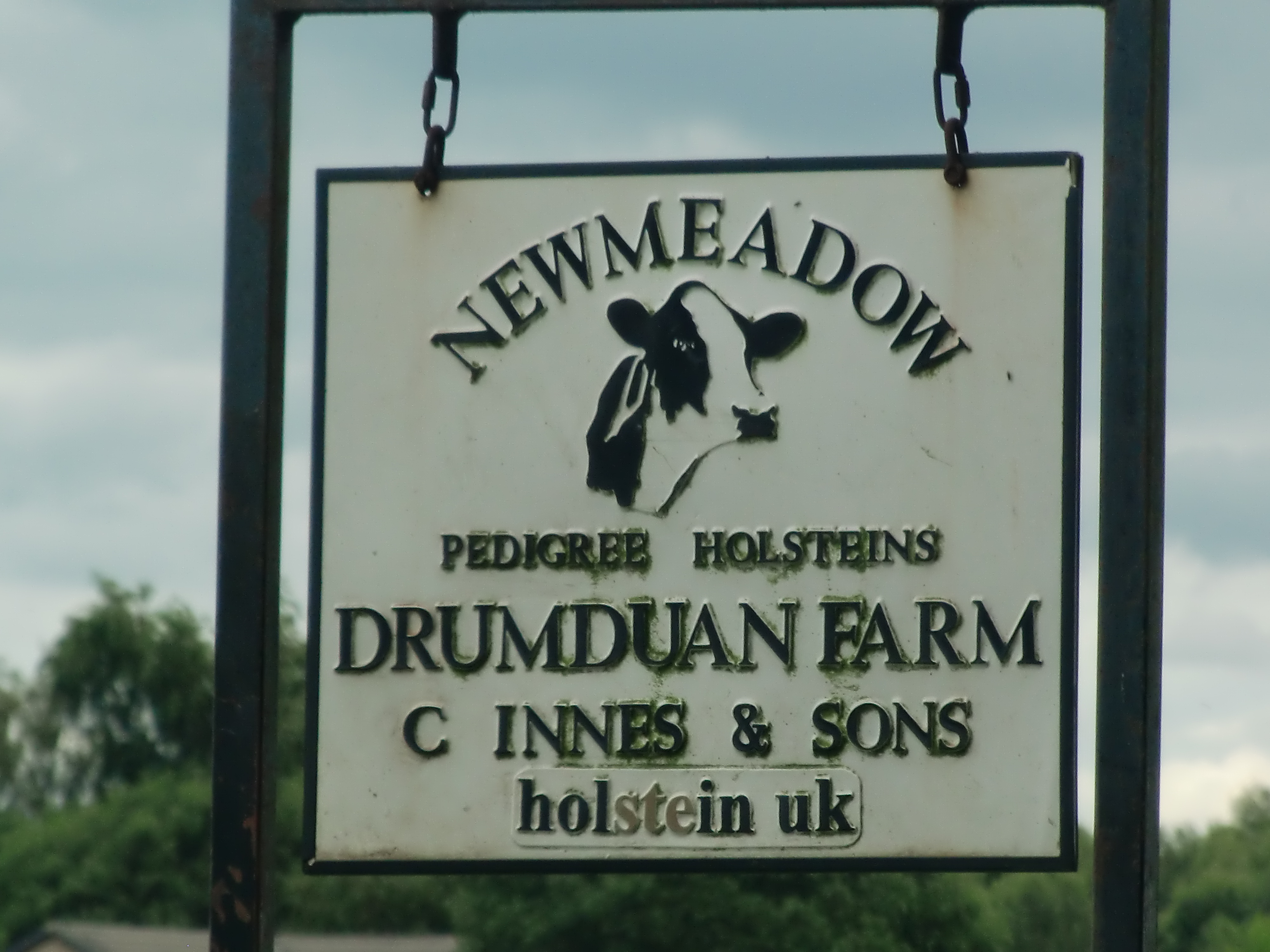
Sign outside Newmeadow farm, Auldearn, Scotland.
Photo W. L. Tarbert (Own work) [CC-BY-SA-3.0 (www.creativecommons.org/licenses/by-sa/3.0)
or GFDL (www.gnu.org/copyleft/fdl.html)], via Wikimedia CommonsPhoto 
What happened to the McClone clan which came to light in 2010? This clan was a Scottish herd of Holstein milking cows who were apparently the granddaughters of an American cow's ear (see A FEW BUILT-IN PROBLEMS WITH CLONED ANIMALS - GMFS News Archive, November 2010, and McCLONES - July 2011).

The story so far is difficult to piece together from the patchy, and sometimes muddled, information appearing in the press, but it runs something like this...

GM goats

August 2011
“Modern man does not experience himself as part of nature but as an outside force destined to dominate and conquer it. He even talks of a battle with nature, forgetting that, if he won the battle, he would find himself on the losing side.” E. F. Schumacher
If you've been reading about the Scottish scientists who seem unaccountably keen to produce genetically-improved livestock using GM and cloning techniques, you'll be aware of the abysmal survival rate of the experimental animals at all stages of the process (See McCLONES – July 2011).

McClones

July 2011

Photo © Greenpeace / Christian Lehsten
Cloning animals isn't strictly a GM-food issue. However, it does involve removing DNA from its native environment and putting into a new one, with all the same, inevitable, disruption of genomic coherence and compromised health (see Nuclear Transplant (Cloning) below). There's also no doubt that the major incentive for cloning animals is that the procedure enables genetic transformation.