Pages

Showing posts with label oil seed rape. Show all posts

Keep hidden gene-edited crops out of the food chain

September 2018

Biotech scientists in the UK have successfully fooled themselves and their regulators into believing that artificial mutation is somehow a "natural phenomenon", and that the outcomes of new mutagenesis techniques could somehow happen in nature. Earlier this year, encouraged it seems by the Advisory Committee on Releases to the Environment (ACRE), our Department of the Environment, Farming and Rural Affairs (DEFRA) was happy to give consent for field trials of GM Camelina*. These experimental crops include two lines produced using CRISPR-Cas9 genome editing [1].

Both scientists and regulators were so convinced that the preliminary opinion issued by the European Court of Justice Advocate General in January this year had said that all mutagenesis techniques should be exempt from regulation instead of what it did actually say [2], that they forged ahead with the development of gene-edited crops. The field trials have, therefore, not been subject to any GM-related safeguards.

Glyphosate infusion into the world

October 2016
Photo Creative Commons
Glyphosate herbicide usage has got so out of control, it seems to have taken on a life of its own.

Most of the livestock which provide us with our meat, dairy and eggs are fed maize, soya and cotton seed. Most of these three crops are liberally sprayed with glyphosate because they've been genetically transformed to accumulate this weedkiller.

Livestock aren't the only animals eating GM crops. Bees can forage over several miles, and monocultures of GM maize, soya, cotton, and oilseed rape in flower provide a bees' banquet. Hardly surprising then that American honey is ubiquitously contaminated with the herbicide.

Simply fussy plants

July 2016
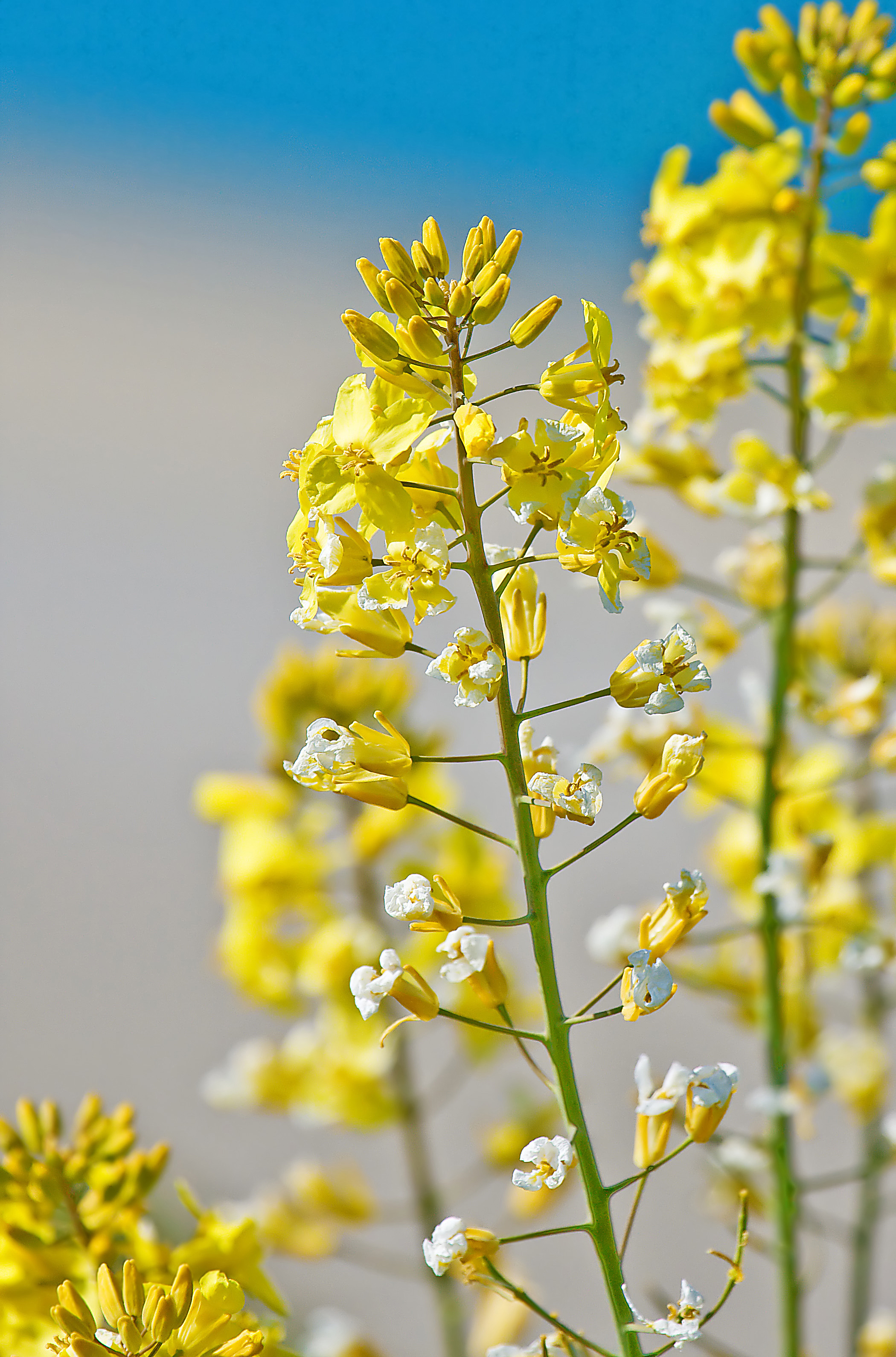
Oilseed rape: photo Creative Commons
"Genetically modified organism means an organism's DNA was changed to make it different, often to make it ... contain more usable parts."

One old-timer plant biologist recalls "heady times" when he walked up and down rows of flourishing GM oilseed rape growing side-by-side with its "struggling" conventional counterpart in an experimental low-nutrient soil.

This GM rape had an extra artificial gene, copied from barley, which helped it use nitrogen more efficiently. It promised to be the answer to the world's increasingly degraded and depleted soils.

The 'barley' gene itself doesn't seem too controversial, and has been successfully inserted into wheat and rice, both major staple food crops. Nevertheless, while Big Biotech has been developing fertilizer-frugal GM crops for over a decade, it admits these are still at the 'proof-of-concept' stage and nowhere near the market.

Organic farmers pay the price of GM

April 2016

While America wakes up and finds itself with a GM alfalfa pollution problem [1], and Spain scrambles to control its GM maize pollution problem [2], the UK has just found itself with a GM oilseed rape which nearly became a pollution problem.

Britain doesn't, of course, grow GM anything commercially.  The offending genes were found during routine trials of seeds seeking new plant variety registration.  DEFRA quickly recalled the seeds, and ensured that all affected plants will be destroyed by the company which supplied them.  Mysteriously, the seed was imported from France which doesn't grow GM oilseed rape either.

A grass going feral and becoming a conduit for gene contamination is predictable [1].  An invasive gene-transmitting weed from the other side of the world in today's globalised market [2] is something we have to start watching out for.  The possible pollution of our entire seed supply is simply stupidity.

The problems caused by GM contamination aren't abstract or ideological threats. 

GM crops compromise science

September 2015

Photo Creative Commons
The recent analysis of rodent chow used by laboratories and breeders which found multiple toxic contamination in all samples tested from all over the world has cast doubt on an awful lot of science [1].

If both test and control (comparator) animals in an experiment are consuming a back-ground level of toxins, any additional effect arising from the test-substance (a GM food or a pesticide, for example) will have to be massive to stand out above the noise.

The upshot is that regulators can wrongly conclude a substance under test is safe because the 'science' shows there's no significant difference between the exposed animals and the unexposed controls ... because they're both sick.

Genes know no boundaries

July 2015
GMO protest. Photo Creative Commons
How many random GM plants are kicking around in the food chain?

We've already had two indications of just how bad things might be. 'Starlink' Bt-insecticidal maize which was approved for animal feed only was found to be widespread in maize for human consumption after only two growing seasons, and later turned up in seven countries. Ten years after the first contamination alert, Starlink was found in Saudi Arabia. Two strains of experimental GM rice (one in China, one in America) which were grown in short trials over a very limited area nevertheless succeeded in contaminating global rice supplies.

A constant supply of GMO contamination

June 2015
Photo Creative Commons
Switzerland has never allowed the cultivation nor import of GM oilseed rape. Despite this, in 2011 and 2012, GM rape was found to be growing wild along railway lines near the freight station and in port areas in Basel.

The following year, further more detailed sampling was carried out to investigate how this has come about.

America: one vast outdoor GMO experiment

November 2014


Prairie road through canola. CC photo by Jeff Franklin on Flickr
In 2010, a US specialist in plant populations found GM canola thriving widely along North Dakota roadsides. It was genetically transformed to resist proprietary herbicides and had been sprouting for generations. Recently, she gave an update:
“It's still there, and it's always going to be there. When you're driving down the road, and the only thing standing is herbicide-resistant canola, biodiversity has taken a hit.”

Commercial strains of herbicide-resistant canola growing where they shouldn't be are easy to spot. But the Animal and Plant Health Inspection Service (APHIS), the body responsible for promoting and protecting US agriculture, has approved nearly 20,000 field trial permits covering some 100,000 plantings of experimental GM crops.


Are these crops already joining the roadside GM canola which is "always going to be there"?

More inconclusive data on GM safety

October 2014

The French scientists whose long-term GM feeding experiment suggested harm to health, have voiced concerns about another study accepted by the same journal which published, then retracted, their own study [1,2]. This newly-published paper described a short-term GM feeding study carried out by a team of scientists from biotech company, DuPont Pioneer.

Food and Chemical Toxicology (FCT) withdrew the French paper last year due to the 'inconclusive' nature of some of the data (a novel ground for rejection apparently invented by the journal editors). The French team pointed out that the DuPont Pioneer study used feed compromised by an unassayed GM content which could have masked significant differences between the feeds, and ironically made the results 'inconclusive'.

Fit as a weed

September 2014
 
Photo of green wild rice growing in a field
Wild rice. CC photo by Denrdoica cerulea on Flickr
The vast majority of GM crops now being grown commercially have had a gene inserted to make them resistant to glyphosate herbicide.
 
After spraying with glyphosate, the yield of the GM crop is protected because the weeds competing for nutrients are killed.
 
Gene escape from glyphosate-tolerant crops into wild relatives has never been considered an important problem because unless the wild GM derivatives are sprayed with the herbicide, they will have no special fitness advantage and no reason to run riot. But, this 'wisdom' has been challenged by a team of Chinese scientists.
 
Glyphosate kills plants by inactivating an enzyme, 'EPSPS'*. EPSPS is vital to a number of key metabolic processes because it's responsible for generating a class of essential amino acids (the building block of proteins). These amino acids are vital to the formation of, for example, the plant's supportive material (lignin), plant growth hormone, and a huge range of immune-system substances, which together can account for as much as 35% of a plant's biomass. 

GM crops in decline

May 2014

Picture of a field of cotton with blue sky and clouds
Field of cotton in Canada. CC photo by Mike Beauregard on Flickr
The total area planted with GM crops in industrialised nations has fallen for the first time since the technology was commercialised in 1996. Last year, GM plantings in those countries fell by about two percent.
 
These figures don't come from any "wicked", "environmentalist", "Luddite", "GM crop-trashing vandals" trying to say "I told you so". They come from the International Service for the Acquisition of Agri-Biotech Applications (ISAAA).  

Gene pollution update 2013

November 2013

Wheat growing in Oregon, USA. Photo Gary Halvorson
Oregon State Archives [Attribution], via Wikimedia Commons
The chance discovery of illegal GM wheat growing in a field in Oregon highlighted some uncomfortable home-truths (see GM CONTAMINATION DÉJÀ VU - June 2013).

Despite its wholesale move to GM agriculture and widespread field-trials of experimental GM plants, America isn't monitoring gene 'escapes': the rogue herbicide-tolerant wheat only became obvious when it survived spraying with Roundup herbicide, and its source has never been pin-pointed. While it seems unlikely that a single field could become so widely contaminated accidentally, no other similarly polluted areas have been identified.

Why 'co-existence' is impossible

January 2013

Canola. Photo Gary Halvorson, Oregon State Archives [Attribution]
via Wikimedia Commons


1. GM canola flows along roads

A year ago, we reported that GM canola (oil seed rape) was being found everywhere.

This “everywhere”, referred to the well-established and happily inter-breeding GM plants now widespread on roadsides in Canada and America.

Sense in pollution

September 2012


Canola field in Western Australia. Photo credit: I [GFDL (http://www.gnu.org/copyleft/fdl.html),
CC-BY-SA-3.0 (http://creativecommons.org/licenses/by-sa/3.0/) or GFDL
(www.gnu.org/copyleft/fdl.html)], from Wikimedia Commons
Australian farmers have had eight years to learn that GM canola (oilseed rape) isn't wanted. Most have learned the lesson well, but in Western Australia they've learned the hard way.

Once upon a time, manufacturers supplied retailers with what the end-customer wanted, and the end-user paid for the goods. The system flowed and everyone lived happily ever after.

Down-under, this supply-and-demand logic seems to have been stood on its head.

GM food through the back door

July 2012
Basmati Rice
Basmati rice. Photo by cookbookman17 on Flickr
Despite its almost total rejection of GM in food, feed and the environment, Europe is getting a lot of GM by the back door.

We all know about the GM animal feed widely used to produce our meat, eggs and dairy. Different UK supermarkets have confusingly different policies on what feed they allow, and consumers will rarely find a label to tell them what they're eating has been eating.

Proof that 'wild' GM plants can quickly become a reality.

October 2011
Wild Mustard. Picture from Wiki Commons
GM crops were rushed into farmers' fields on the back of sweeping generalisations about what their influences in the environment might be, but very little actual science.

An assumption was made that classic Darwinian mechanisms would render GM plants uncompetitive and therefore self-limiting outside of cultivation.

Added to this was a lot of wishful thinking about the effectiveness of man-made protocols to prevent gene 'escape'.

Since then, the rarity of reported GM introgression into the wild has been an additional excuse to dismiss environmental risks.

In many cases, the assumptions and wishful thinking may be true. But there's certainly one major GM crop which doesn't, and never could be expected, to fit the man-made mould.

Somerset GM contamination

March 2011

In December 2008, the UK Government announced that unauthorised GM oil-seed rape (OSR) had been found growing in Somerset.

The offending grain received EU approval for import, food and animal feed use in 2005 providing the handlers had been given appropriate plans for eradicating any volunteer GM OSR plants which could arise.

The contamination was found in a small trial field of a new non-GM variety of OSR shipped from a Monsanto seed production farm in Idaho. It was found to be contaminated with about five GM seeds in every 10,000. This doesn't sound like a lot, but nevertheless an adjacent OSR trial crop was found to have been contaminated at a measurable level of one in 10,000.