October 2017
World-wide, polio is now a disease of the past in all but two countries. The battle has been waged with mass vaccination programmes reaching, for example, 95% of infants in Europe. Even in Pakistan and Afghanistan, polio's last stand, the annual incidence has been reducing dramatically year-on-year and is down to a few tens of cases. Indeed, conquering this virus has been one of the great success stories of modern medicine.
Showing posts with label pharm crops. Show all posts
GM by injection?
May 2016
Early in the GM game, the public were regaled with rosy images of the therapeutic wonders which GM crops would provide: the world would be rid of hepatitis B and other infectious diseases by a vaccine a single dried GM banana chip; Third World blindness would be banished forever with a bowl of vitamin-A-rich GM rice; unwanted preganacies would be a thing of the past with a little GM contraceptive corn delivering human antibodies to fight off sperm.
These wonders don't seem to have actually materialised yet: vaccines-in-a-banana disappeared below the radar, golden-rice has generated lots of PR but no healthier people [1], and the pregnancy-preventing plants fizzled out in bankruptcy.
However, GM pharmaceuticals are certainly alive and well and generating vast profits for industry.
Early in the GM game, the public were regaled with rosy images of the therapeutic wonders which GM crops would provide: the world would be rid of hepatitis B and other infectious diseases by a vaccine a single dried GM banana chip; Third World blindness would be banished forever with a bowl of vitamin-A-rich GM rice; unwanted preganacies would be a thing of the past with a little GM contraceptive corn delivering human antibodies to fight off sperm.
These wonders don't seem to have actually materialised yet: vaccines-in-a-banana disappeared below the radar, golden-rice has generated lots of PR but no healthier people [1], and the pregnancy-preventing plants fizzled out in bankruptcy.
However, GM pharmaceuticals are certainly alive and well and generating vast profits for industry.
Suicide-bomber organisms
![]() |
| Image Creative Commons |
In 2000, 193 governments signed up to a moratorium created at the UN Convention on Biological Diversity which specified that Genetic Use Restriction Technologies (GURTS) would not be field tested nor commercialised.
GURTS, also known as 'terminator technologies', span any genetic trick used to prevent reproduction of GMOs.
The first GURTS were used to produce GM plants with sterile seed which farmers couldn't 'steal' to grow the next year's crop, and which provided very cost-effective in-built protection for industry patent rights. Concerns were raised, and never resolved, that the artificial fertility-damaging genes could spread into conventional crops and cripple yields.
Things went quiet for a while, but then terminator trees loomed over the horizon and, this year, the Brazilian government began to wrestle with idea of embracing crops with GURTS.
It's also emerging that some very fancy genetic systems for self-destruction are under development.
Bio-P potatoes
July 2015
The latest UK Government GM venture has been announced: GM potatoes designed to satisfy consumers, farmers and food processors.
First off the planned production line in a few short years will be potatoes containing a stack of novel genes: three to combat late fungal blight, two to ward off nematode soil pests, two to switch off the production of sugars and an amino acid which together have a nasty habit of producing a toxic derivative when heated, and one to switch off the enzyme which turns raw potatoes black when they're bashed.
Future GM potatoes are planned which will have increased nutrients and which don't sprout in storage. Also under investigation are weird potatoes for industrial starch production and vaccines-in-a-spud.
Novel potatoes for biofuel production are not to be developed as these would compete for food-growing land and are not considered the socially-preferred option.
![]() |
| Non-GM potatoes. Photo Creative Commons |
First off the planned production line in a few short years will be potatoes containing a stack of novel genes: three to combat late fungal blight, two to ward off nematode soil pests, two to switch off the production of sugars and an amino acid which together have a nasty habit of producing a toxic derivative when heated, and one to switch off the enzyme which turns raw potatoes black when they're bashed.
Future GM potatoes are planned which will have increased nutrients and which don't sprout in storage. Also under investigation are weird potatoes for industrial starch production and vaccines-in-a-spud.
Novel potatoes for biofuel production are not to be developed as these would compete for food-growing land and are not considered the socially-preferred option.
Maize pollen travels a long way
Meaningless prohibitions
October 2014
So far, America has single-handedly
contaminated the world rice market with an experimental GM variety
(herbicide-tolerant LL62, illegal at the time but legalised in a
hurry by the US administration), permanently contaminated its own
commodity maize supply with a GM variety (insect-resistant
StarLink, legally grown for a short time and since banned on safety
grounds), and is grappling with two inexplicable
contamination-incidents involving two different GM wheat varieties
(both herbicide-tolerant, one in Oregon and one in Montana,
neither legal anywhere).
![]() |
| Anti-GMO protester |
Are these real-world warnings being
taken to heart?
After recurrent contamination problems
from experimental trials of GM pharmaceutical plants APHIS* was
stirred into action.
*Animal and
Plant Health Inspection Service of the US Department of Agriculture
Biotech company, Prodigene, was fined a
modest $3,500 for the infringements, but the Company and its
“successors in interest” were also prohibited from carrying out
any future GM releases.
Horizontal gene transfer is widespread
July 2014
From GM day-1, there's been a culture of denial over the possibility of artificial genes moving between organisms (horizontal gene transfer).
![]() |
| Photo from Creative Commons |
Some lip-service has been paid to the danger of anti-biotic-resistance marker genes (ARMs)* moving from GM crops to bacteria in the environment to create untreatable diseases. Europe even decided to ban GM crops containing such genes, but somehow it never seems to have happened.
The risks of 'pharm' rice
December 2011
Scientists in China have developed GM rice which could be used to produce an important human blood protein in the foreseeable future.
The protein is ‘human serum albumin’ (HSA), a major constituent of blood. It has wide, life-saving, clinical applications in treating, for example, burns and blood loss, and is necessary for the cell cultures used to produce vaccines and pharmaceuticals.
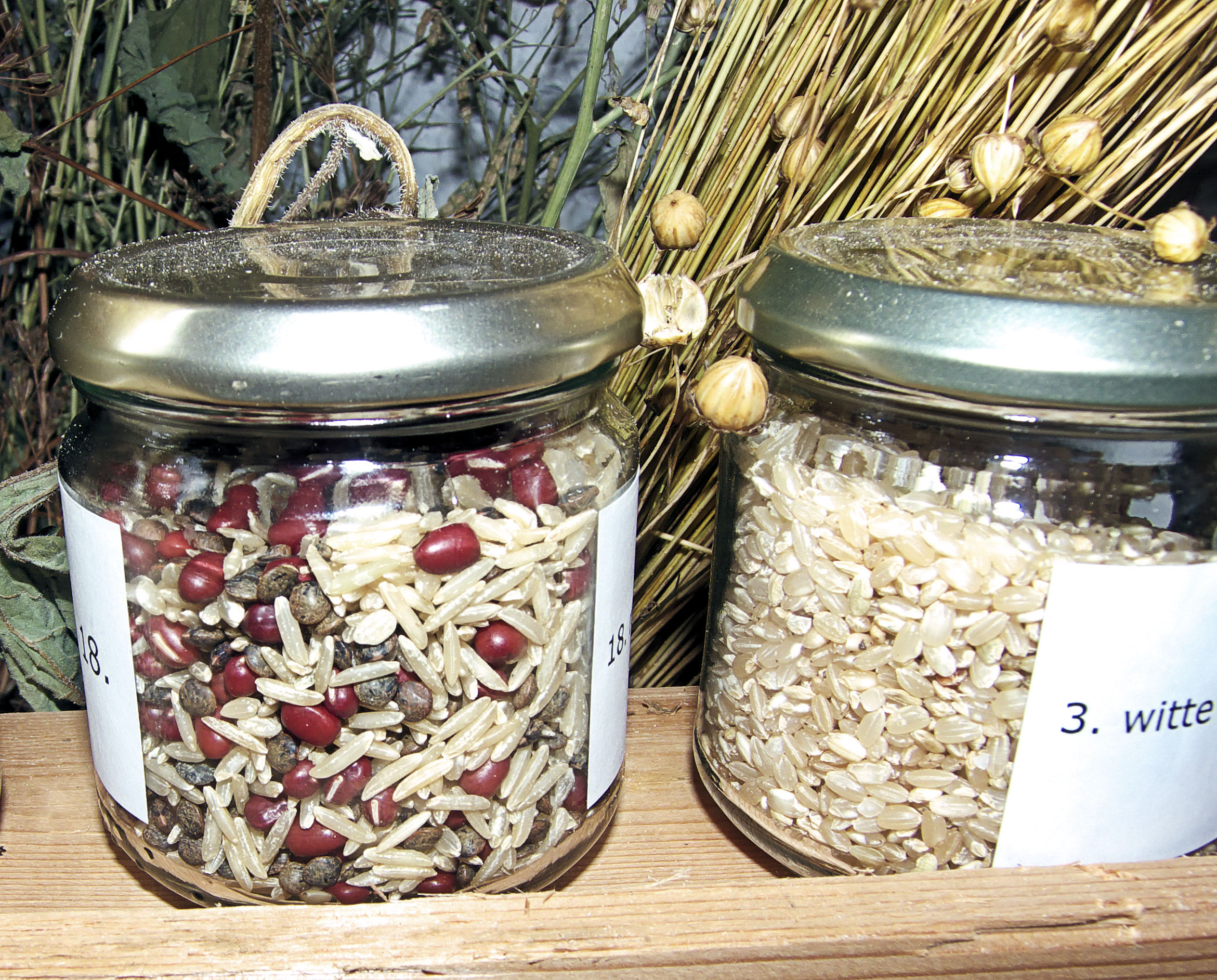
| Different types of rice. Photo from Wikimedia Commons |
The protein is ‘human serum albumin’ (HSA), a major constituent of blood. It has wide, life-saving, clinical applications in treating, for example, burns and blood loss, and is necessary for the cell cultures used to produce vaccines and pharmaceuticals.
Subscribe to:
Posts (Atom)