Pages

Indirectly GM bees

 March 2022


"Even with the complete genetic information of a synthetic micro-organism, it is beyond the capacity of any existent bioinformatic analysis to fully predict the capability of a synthetic organism to survive, colonise and interact with other organisms under natural conditions, given the uncountable diversity of potential microhabitats and their temporal variability." (European Food Safety Authority, 2020)


By "synthetic micro-organism" is meant GM bacteria, GM fungi and GM yeast*. In their natural form all of these are a permanent feature inside, on and around higher plants and animals where they interact with each other and with their host to play a vital role in health and disease.

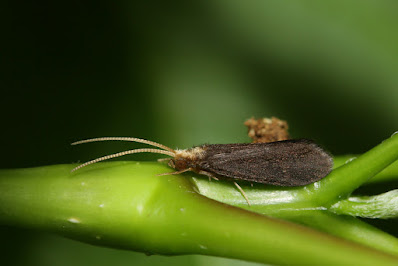
Caddisfly non-science nonsense

March 2022


The industry-friendly notion that the by-products of GM crops would somehow remain harmlessly in the fields was proved wrong in 2007 when a team of American biologists went out and did some science.

Escaped genes - a risk assessment minefield

March 2022


While conventional breeding speeds up the evolution of plants and skews it gradually to fit human needs, genetic engineering forces abrupt and disruptive changes in genome structure and function. The artificial gene (or edit) functions as it's designed to within the highly uniform genetic and environmental context of a modern commercial crop. How does it function in any other genome and ecosystem?

Risk assessment of GM plants has always focused on the intended artificial trait coupled to an assumption that if the altered bit of DNA 'escaped' into other plant populations it would fizzle out over time unless it conferred a clear, identifiable, risk-assessable fitness advantage. Now that we've grown GM crops in various environments for over two decades and there's been time for gene contamination incidents to inform the science, this trait-centred risk assessment is proving shaky.

GM safeguards scrapped in the UK

February 2022


As Westminster continues its love affair with high-tech industrial agriculture, the dismantling of GM safeguards in the UK is underway.

Towards the end of 2021, our Environment Secretary announced regulatory exemptions for field trials of "plants produced by genetic technologies where genetic changes could have occurred naturally or could have been a result of traditional breeding methods".

GM cotton in India

February 2022


Once upon a time in India, farmers grew indigenous ('desi') Asiatic cotton.

Desi cotton was grown in multi-cropping systems which provided back-up crops if one of them failed. It could be planted at a high density to increase yield and had a short season which reduced pest exposure. This traditional cotton had good tolerance to biotic and abiotic stresses, including bollworm, saline conditions and drought. Today, the crop accounts for less than 3% of the cotton area in India.

GM staples in Africa

February 2022


The vast continent of Africa has long been a key target for GM agriculture [1,2]. So far, three GM crop types (cotton, soya and maize) all with the standard insect-resistance or herbicide-tolerance traits have been released across six African countries, the most widely adopted one being 'Bt' insecticidal cotton. These are all commodity crops designed for maximum yield, and are promoted as a tool to boost agricultural productivity and alleviate food insecurity. There has, however, been a clear gap between the promises and the reality.

A study published in 2021 explored this problem.

GM wheat in Argentina

February 2022


In 2004, the US, Canadian and European wheat markets breathed a sigh of relief when Monsanto yielded to pressure and withdrew its glyphosate-tolerant GM wheat from the pipeline.

Predictably, it was just a matter of time before GM wheat popped up again, this time as 'HB4' with combined drought-resistance and tolerance to glufosinate herbicide.

HB4 has now been approved by Argentina: no surprise there, because the country has long been a key route used by the agrichemical industry as a bridgehead to the rest of Latin America for the (legal and illegal) dissemination of its products.