Pages

Fungi don't like Bt

May 2012
Corn, Corn, Corn
Corn harvest in Minnesota, USA. Photo by PXLated on Flickr
A major focus for GM crop development has been in 'Bt' crops which generate their own insecticides modeled on similar proteins produced by Bacillus thuringiensis soil bacteria.

Because Bt-protein has been passed off as highly specific in its ability to kill certain insect pests, it has been assumed safe for the wider environment. However, no one's actually been testing this assumption.

In the US in 2011, 88% of the corn cultivated was GM. Most of it was transformed to express a Bt insecticide. Globally, GM corn is grown in at least 16 different countries. Shocking therefore, to realise that scientists have only just begun to look at what Bt crops do to the soil. And, not surprisingly, when scientists began to look, they found problems.

Neat topic. Big word


May 2012

Some definitions...
  • science - systematic or formulated knowledge
  • bio - from the Greek word 'bios' meaning the course of life; modern use extends this to include organic life; hence biology - the science of life
  • technology - the science of the industrial (trade or manufacturing) arts
  • tool - mechanical implement
In 2001, when the biotech industry was beginning to realise it wasn't going to be able to 'educate' sceptical UK adults to want its GM food, it had a go at their children.

The information which the new industry wanted to feed to young minds was presented in a series of attractive, colourful booklets: “Your World - Biotechnology & You - a magazine of biotechnology applications in healthcare, agriculture, the environment and industry”. These were made available to secondary schools. 'Genetically Modified Crops and Foods' was one edition tucked into a stack of other biotech-science-type stuff to make it look like a useful, up-to-date, teaching aid. Lest there be any doubt that the venture was anything but a GM-promotion exercise, the issue of 'Your World' magazine which described the wonders of GM food ended, chillingly
“You probably now understand more about these complex issues than most adults. Go educate your elders”.

The demise of the McClones


May 2012

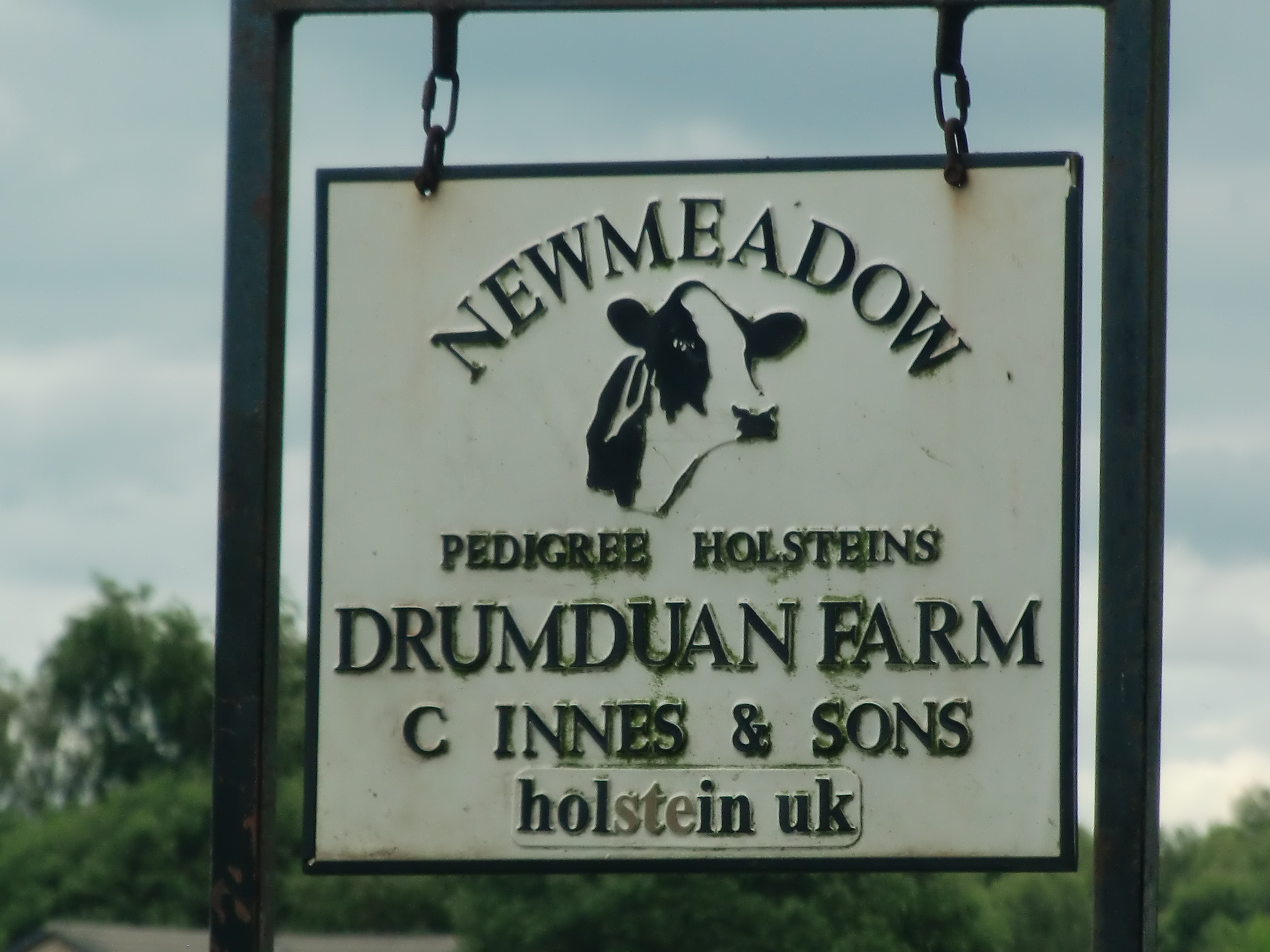
Sign outside Newmeadow farm, Auldearn, Scotland.
Photo W. L. Tarbert (Own work) [CC-BY-SA-3.0 (www.creativecommons.org/licenses/by-sa/3.0)
or GFDL (www.gnu.org/copyleft/fdl.html)], via Wikimedia CommonsPhoto 
What happened to the McClone clan which came to light in 2010? This clan was a Scottish herd of Holstein milking cows who were apparently the granddaughters of an American cow's ear (see A FEW BUILT-IN PROBLEMS WITH CLONED ANIMALS - GMFS News Archive, November 2010, and McCLONES - July 2011).

The story so far is difficult to piece together from the patchy, and sometimes muddled, information appearing in the press, but it runs something like this...

Danish pig farmer whistleblower


May 2012
Photo by Klaus Höpfner at de.wikipedia [GFDL (http://www.gnu.org/copyleft/fdl.html)
or CC-BY-SA-3.0 (http://creativecommons.org/licenses/by-sa/3.0/)], from Wikimedia Commons
The Danish pig industry is well-known for combining intensive production with outstanding productivity (almost 30 weaned piglets per sow per year), and exceptionally low antibiotic use (as much as a quarter of what some countries find they have to apply). In fact, antibiotic use in Denmark is strictly controlled by veterinarians and is recorded.

Danish pig farmers might be about to become well-known for something else: they may prove the world's whistle-blowers for problems arising in livestock given GM feed.

Three reviews of GM safety

May 2012
GMO maize testing. Photo by I, Yann [GFDL (http://www.gnu.org/copyleft/fdl.html), CC-BY-SA-3.0 
(http://creativecommons.org/licenses/by-sa/3.0/or CC-BY-SA-2.5-2.0-1.0
(http://creativecommons.org/licenses/by-sa/2.5-2.0-1.0)], via Wikimedia Commons
Three reviews of the published science on the 'safety' or 'health impact' of GM plants appeared in 2011.

One of these was the third periodic examination of the scientific literature by Spanish scientist, José Domingo. His reviews have all focused specifically on the “potential adverse health/toxic effects” of GM food plants.

Glyphosate is toxic to mouth cells

April 2012
Spreading Pesticide
Chinese farmer sprays pesticide on crops
Photo IFPRI-Images on Flickr
Glyphosate is the largest selling herbicide world-wide. It's been in use for decades to clear weeds from private and public paths, roads and play-areas, from waterways, and from agricultural fields both pre-planting and pre-harvest. More recently, glyphosate's use has risen exponentially with the advent of GM commodity crops able to survive it, plus the ensuing glyphosate-resistant weeds which need ever increasing doses of the herbicide to kill them.

Tadpole tails and Roundup herbicide

April 2012
Tadpoles were used in a Roundup study
Photo by Olaf Tausch (Own work) [GFDL (http://www.gnu.org/copyleft/fdl.html) or CC-BY-3.0 (http://creativecommons.org/licenses/by/3.0)], via Wikimedia Commons
A study has been published which shows, for the first time, that Roundup herbicide stimulates adaptive physical responses during the development of a vertebrate animal.

Roundup is a very widely-used weed-killer. It is sprayed, in particular, on crops genetically transformed to survive it, and can end up in many non-target areas which are the homes of wildlife.

Adaptive physical responses produce important permanent changes during an animal's development which tailor the individual to the particular environment it's going to live in. Conversely, an inappropriate adaptive change can disadvantage the animal.

The study used tadpoles as a model vertebrate.