Pages

Showing posts with label apples. Show all posts

A tale of microbes, your gut and disease

December 2019


Scientists who have escaped the distortions of the reductionist mindset, in which 'life' is a mixture of chemicals dictated by genes, are beginning to recognise that organisms have two genomes*: the 'primary' genome is inside cells and is responsible for cell structure and function; the 'secondary' genome may consist of more genes than the primary one and is contained in the wealth of microbes inside and outside the organism, effectively a dynamic interface between the environment and the individual.

*The genome is the total complement of DNA including genes and other gene-regulating sequences in the individual (US National Library of Medicine)

There's increasing awareness that the quality, proportions and diversity of microbe species in our gut is closely connected to health and disease. Disturbances in our digestive tract flora have been linked to numerous chronic diseases, for example, allergies, autoimmune disorders (such as type 1 diabetes), arthritis, obesity, cardiovascular problems, cancer, learning and memory impairment, anxiety, stress, depression, autism and dementia. Our gut bugs play a leading role in neutralising a huge range of environmental pollutants before they can harm us, and in keeping pathogens at bay.

Live life on the veg

July 2019

The kiss of the sun for pardon
The song of the birds for mirth
One is nearer God's heart in a garden
Than anywhere else on earth.
(Dorothy Gurney 1858-1932) 


Professor of Biological Sciences (and avid gardener) Dave Goulson of the University of Sussex advocates growing your own fruit and vegetables because it's good for the environment, saves money, and "is also extremely good for the soul, giving people a real sense of satisfaction and getting them out into nature". 


TV chef, Hugh Fearnley-Whittingstall, chipped in "Anything that takes you away from anonymous, industrialised food is good for your spirit and your health.  It's in season, it hasn't travelled far and it hasn't been packed in inert gases to give it a long shelf life". 


A study in America where, despite its wealth, more than 10% of households experience food insecurity in any given year looked into the benefits of growing your own vegetables. 

Our irrational unclean food supply

January 2019


The next 'must-have' for our food promises to be 'clean food labels'.

Amidst growing consumer concern about chemical residues in their food, organic and all-natural foods are growing in popularity and more than half of US adults are avoiding artificial ingredients and preservatives. Public awareness of the agrichemicals in their food has been sharpened by the cancer scare surrounding Roundup weedkiller and its active ingredient, glyphosate [1].

Agriculture is one of the worst polluting industries on the planet, and GM crops, all designed for use within, and to expand, the chemical-based agricultural business model, are a continuing pillar of the problem. A huge proportion of GM crops has been transformed specifically to enable spraying with glyphosate, and many now withstand other, more obviously harmful, herbicides, or generate their own artificial insecticides.

GMOs are also a source of 'natural' supplements, food additives and processing aids [2,3,4].

Are consumers right to be wary?

GM with the 'wow' factor

January 2019


The next innovations in the fresh food sector promise to have a "wow factor": colour like you've never seen before, taste and smell to die for, a delightful texture, all contributing to a longer, healthier life for the consumer. If this isn't enough, add in enhanced storage and convenience, and even beneficial to the environment.

The health benefits stem from the extra, health-promoting red, blue and orange pigments these new foods will have, plus the wow factor which will make us eat more fresh fruit and veg. The environmental benefit comes from our resulting reduced consumption of environmentally unfriendly animal produce.

Are you impressed? GM Watch call it "shameless hype".

GM trees on the march

July 2017

GM trees are coming on in leaps and bounds.  The fruit of the Arctic Apple-tree is making its appearance in American Midwest stores [1], but the big GM tree event is 'short-rotation woody crops'.

Short-rotation woody crops are fast growing trees which can be harvested in just a few years for industrial purposes such as paper and biofuels.  Eucalyptus, which escaped from its native Australia when Captain Cook arrived there, has become one such major crop since the 19th Century.  Because different species are adaptable to many local climates, plantations are now found on every continent.  The next wave, just beginning to gain momentum, is GM eucalyptus.

Convenient GM 'Arctic' apples

July 2017

Consumers in the US Midwest may now be finding a new convenience product in their grocery stores: convenient 10oz packs of conveniently sliced apples which conveniently don't turn brown and are a convenient snack.

The apples carry an inconvenient label consisting of a humanly indecipherable barcode which consumers will inconveniently have to scan with their smartphone to find out what in God's name they're buying.

Oxitec business

September 2016
Photo: Creative Commons
From its August beginnings as a commercial spin-off from Oxford University's Innovation management subsidiary, 'Oxitec' self-destruct GM mosquitoes have never quite fulfilled early expectations.

Even the rosy vision of an end to major world killers like malaria, and dengue fever didn't manage to sell Oxitec mozzies.

However, Zika virus with its horrific connections to birth defects, provided a much better PR platform to generate the will to spend cash and annihilate mosquitoes at any cost [1].

In the meantime, the rights to Oxford's GM mozzies have been sold into the tender care of US-based Intrexon Corporation, and continue to be mired in controversy.

Natural food is simple

April 2015

Dr. Kellogg's corn flakes, patented in 1896, were probably the original, very simple, health food (even if no one would eat them until they were transformed into complex junk).

More recently, 'corn' has become associated with stuff that's definitely not in the healthy-choice section. For example: the number one staple junk food is corn syrup, then there's GM corn chock-full of its very own insecticide and specially accumulated weed-killer; and meat from intensively-reared livestock fast-fattened with GM corn to get them to market before their health buckles, washed down with milk from intensively reared dairy herds producing more milk than their bodies can handle (assisted by GM growth-hormone injections for good measure).

Milking (pardon the pun) the rising consumer concern about the cruelty involved in this routine extreme exploitation of cows to give them their daily pinta, scientists have invented Muufri (a worse pun).

How to create unhealthy apples

March 2014

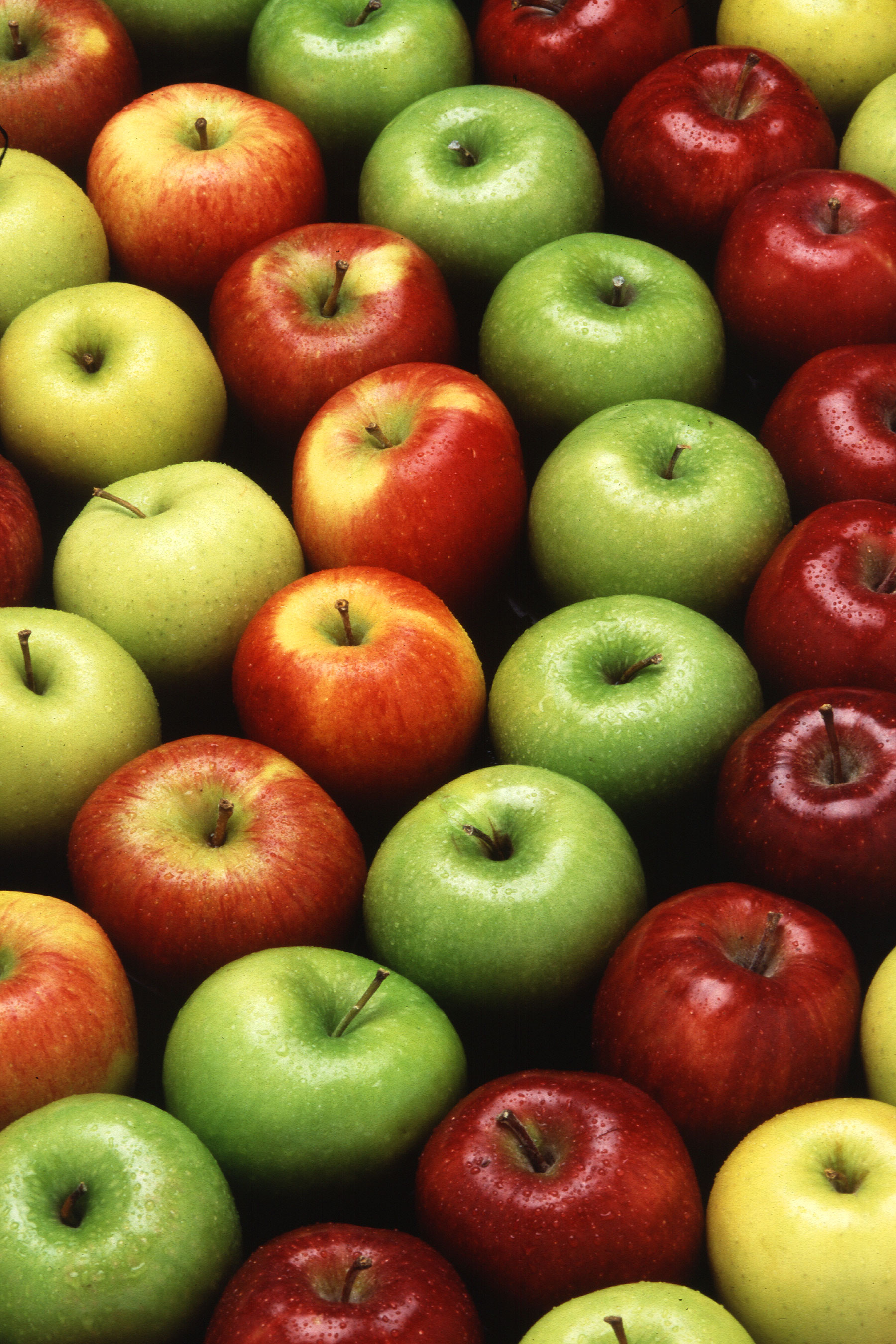
Picture of different colours and varieties of apples
Image Creative Commons
Ever thought of the humble apple as a staple health-food?  Not in the USA it seems. 

Exports of American apples (and pears) to Europe have dropped 73% over the last five years.  The culprit lies in the high levels of two pesticides added to wax coatings to prevent 'scald'.


'Scald' is a post-harvest storage disorder of apples resulting in discoloured patches on the fruits' skin due to damage and death within the surface layer of cells. The cause seems to be long-term storage, especially under unsuitably humid conditions. Similar-looking post-harvest blemishes may arise due to pesticide treatments, sun, or friction damage in the case of very ripe fruit.
Now, there's another problem looming on the other side of the Atlantic.  Two varieties of GM 'Arctic' apples which don't turn brown when damaged looks set to be approved by the USDA. 

America's GM attitude shift

January 2014


March against Monsanto, Washington DC 2013. CC photo from Flickr

Changes in awareness of, and attitude to, GM foods in the US were very evident during 2013.
An attempt to slip a new biotech-friendly consumer-unfriendly measure into a continuing resolution in Congress led to an unprecedented backlash.
The infamous measure was written in co-operation with Monsanto (therefore dubbed the Monsanto Protection Act), and was designed to tie the federal regulators' hands if new health concerns about GMOs came to light.  
In the event, the measure was killed in the Senate, but the damage to the biotech industry had been done.  Two million people around the world had taken to the streets to 'March Against Monsanto', and ongoing awareness had been set firmly in motion.
GM food labelling initiatives in many States have ended, so far, in total or partial failure.  There are more in the pipeline, each adding it's own layer of consumer disquiet about GM foods.  However, something more subtle is afoot in the US food industry.

Frankenapples

July 2013
Non-GM apples. Photo by Scott Bauer, USDA [Public domain]
via Wikimedia Commons
If you've recovered your wits after reading about the latest biotech 'healthy' GM wheat courtesy of its artificial double-stranded RNA seasoning (see FRANKENWHEAT and RNA-MODIFIED FOOD - July 2013), spare a thought for the humble apple.

Non-organic apples already have a stunning array of pesticides in and on them. Forty-two have shown up in US Department of Agriculture tests. These chemicals include endocrine disruptors and suspected neurotoxins linked to ADHD.

A major reason for the application of all these pesticides is the exceptionally narrow gene-base of the modern apple. We rely on a very few choice varieties cloned from a single parent by repeated grafting. Our apples have lost their ability to get along on their own.

As if things weren't bad enough, the latest craze is non-browning GM apples which have artificial dsRNA to add to the mix. This biotech bit blocks the production of the enzyme which causes a damaged apple to turn brown.

It's been pointed out that the browning of an apple's cut surface is an important defense mechanism against the entry of pathogens. The non-browning varieties may therefore need even more chemicals to keep them disease-free.

OUR COMMENT


No one seems to have looked to see what havoc the novel dsRNA might cause in our cells, or in our children.

There's a good case here for for buying old-fashioned apples which have been grown locally, and are organic if at all possible.

SOURCE:
  • Katherine Paul and Ronnie Cummins, Frankenapple: Bad News No Matter How You Slice It, Organic Consumers Association, 17.04.13